Campus Confidential Curriculum
A pilot-ready academic course model where students earn credit by collaboratively writing, performing, producing, editing, and reflecting on scripted scenes inspired by real campus life.
Curriculum model
The course is built for experiential learning, interdisciplinary collaboration, and responsible storytelling. It can run as a special-topics class, production lab, capstone, workshop, or cross-listed pilot.
Production-based
Students learn by making: writing scenes, performing, shooting, editing, documenting process, and delivering completed work.
Interdisciplinary
Built for film, theatre, writing, communications, media studies, and related programs that want a shared production framework.
Role rotation
Students complete at least one primary role and one support role across writing, performance, production, and post.
Academic oversight
Faculty leadership and Port City Productions guide workflow, scope, safety, narrative guardrails, and release decisions.
Semester structure
A guided production lab that mirrors real-world workflow while staying teachable, measurable, and campus-ready.
Intake & Story Development
Issue selection, research, and story mapping. Students pitch scene concepts, define tone, establish constraints, and assign rotating roles for the first production cycle.
Writing Lab & Table Reads
Script drafts, peer notes, rewrites, and table reads. Students learn scene construction, dialogue, pacing, and ethical framing while locking pages for production.
Production Cycle
Rehearsals, blocking, shooting, and sound. Students rotate between on-camera and crew roles and practice set etiquette, scheduling, continuity, and collaborative problem-solving.
Post-Production & Feedback
Editing, sound polish, captions, and final deliverables. Students receive instructor notes and peer review, then complete final cuts aligned to accessibility and platform standards.
Screening & Reflection
Campus screening or class showcase, discussion, and reflective write-ups. Students submit process documentation, role reports, and lessons learned for academic evaluation.
- Typical semester output: 2–4 polished scenes or 1 complete episode, depending on scope and resources.
- Students leave with finished work, process documentation, and role-based portfolio material.
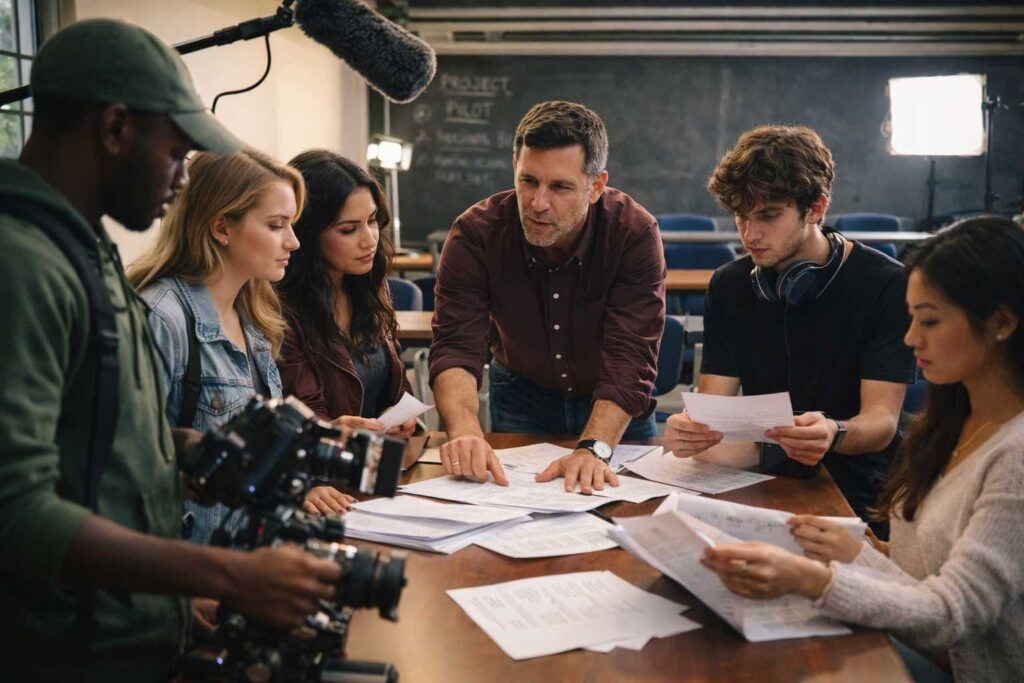
Roles & rotation
Students rotate through core production responsibilities so the course rewards both creative contribution and practical execution.
Writing & Development
Writer’s room, pitch sessions, outlines, revisions, table-read notes, story editing, continuity checks, tone guardrails, and locked-page workflow.
Production / On Set
Directing, producing, assistant directing, camera, sound, script supervision, scheduling, call sheets, continuity, blocking, and set etiquette.
Performance Support
Cast work, rehearsals, scene study, reader support, acting feedback, and respectful handling of sensitive content where needed.
Post & Release
Editing, sound cleanup, captions, titles, simple graphics, exports, accessibility standards, thumbnails, posting plans, and campus-safe rollout.
Resources & requirements
The course can run at multiple resource levels — from a fully equipped media program to a lean first-semester pilot.
Minimum setup
- Smartphones or basic cameras with tripod support
- Simple audio solution: lavs, small recorder, or campus kit
- Classroom or meeting room for writer’s room and table reads
- Basic editing access through campus lab or student laptops
Recommended setup
- Camera kits with basic lens options
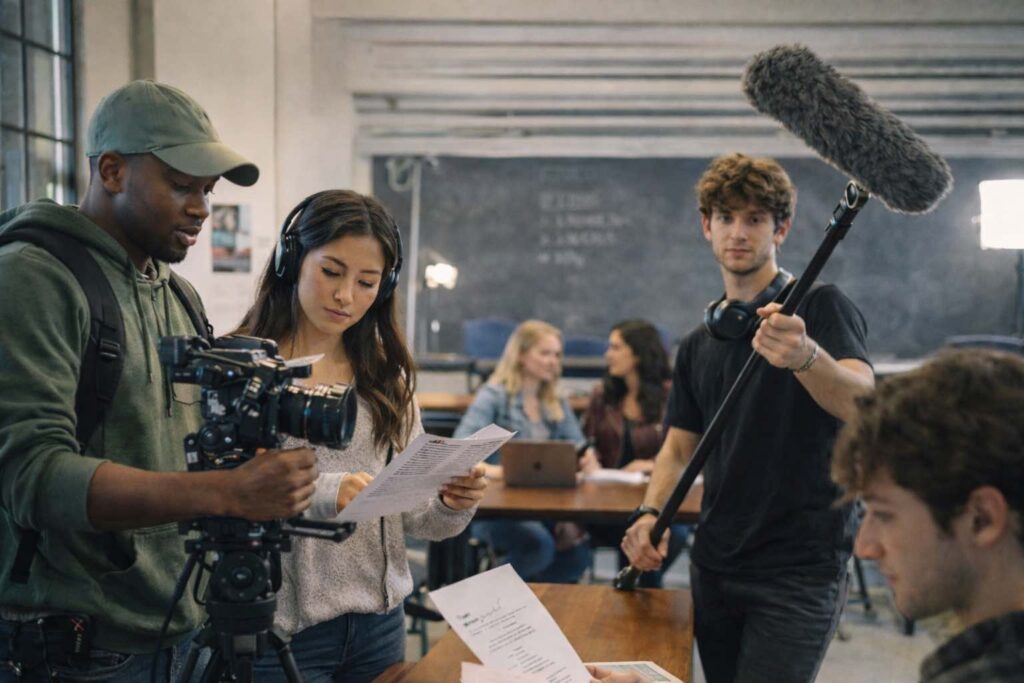
- Dedicated sound kit with lavs, boom, and headphones
- Lighting kit with LEDs and basic grip
- Shared storage or lab-based post-production workflow
Output options
- Option A: 2–4 polished scenes
- Option B: 1 full episode
- Option C: scene cycles plus capstone episode
- Internal screening or optional public release
Grading, assessment & safeguards
The model is designed to be grade-friendly, institutionally responsible, and safe for student participation.
Recommended grade breakdown
Participation and collaboration: 25%. Role execution and deliverables: 35%. Creative contribution: 20%. Reflection and process reports: 20%.
Role reports
Students document what they were responsible for, what they delivered, what worked, what failed, what they would improve, and who helped.
Risk safeguards
Characters are fictional. Stories are composite. Scripts avoid identifiable individuals. Consent, opt-out pathways, and faculty review are built into the production model.
Release controls
Scripts and final cuts can be reviewed before public posting. Internal-only screenings are available, and final release decisions are guided by educational value, not virality.
Faculty partnership & pilot adoption
Port City Productions partners with faculty to tailor the model to each campus’s structure, resources, semester length, and academic goals.
Pilot options
- Semester pilot: one course section producing scenes or one episode
- Departmental pilot: cross-listed course spanning multiple disciplines
- Workshop model: short-term intensive or capstone collaboration
What PCP provides
- Curriculum framework and production workflow
- Sample scripts, tone guides, and narrative guardrails
- Consultation on course setup, scope, and assessment
- Optional guest instruction and production mentorship
The course aligns with experiential learning, student engagement, creative inquiry, responsible media practice, and public-facing portfolio development.
The series is the outcome. The curriculum is the process.
Campus Confidential gives students a structured way to turn campus experience into scripted storytelling, finished media, collaborative practice, and portfolio-ready work — with faculty oversight and Port City Productions support.